
A house viewing goes fast. You walk through a handful of rooms in twenty minutes and have to decide if you can picture your life there. The best questions to ask when viewing a house are the ones that get past the staging and into the stuff that actually costs you money later: why the seller is leaving, what the property is really worth, and what you’ll owe once you own it.
Quick Answer: Questions to Ask When Viewing a House
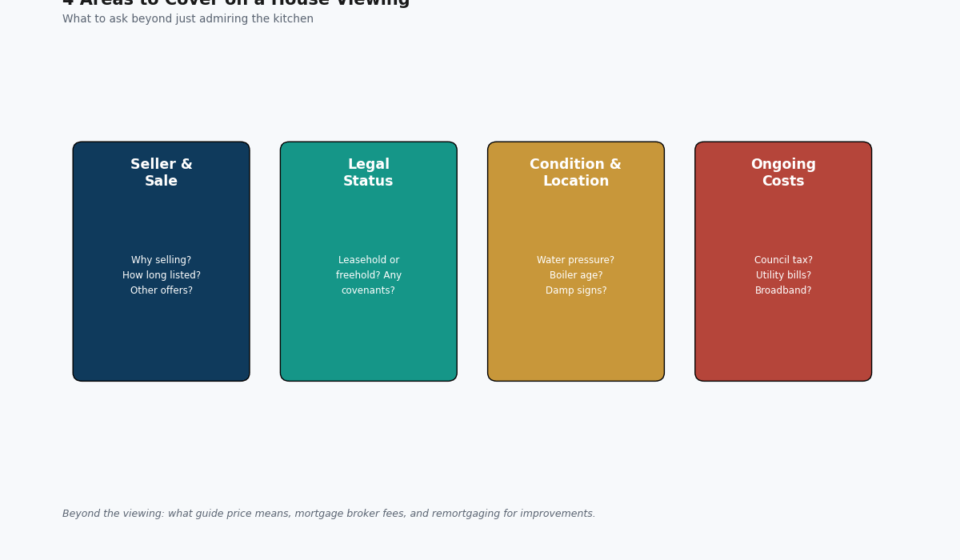
The most useful questions to ask when viewing a house cover four areas: the seller’s motive and timeline, the legal status of the property, its structural condition, and the ongoing costs. Ask why the owner is selling, how long it has been on the market, whether it’s leasehold or freehold, and what council tax and utility bills typically run. Beyond the viewing itself, ask what the listed guide price actually means, what a mortgage broker will cost you, and whether the property could support a future remortgage for renovations.
Questions to Ask When Viewing a House About the Seller
Start here, because the answers shape everything else. Why is the owner selling? How long has the property been on the market? Has the asking price dropped recently? Have they found somewhere else to move to? Are they under pressure to complete quickly? A seller who needs a fast sale may accept an offer below the guide price. One who isn’t in a rush might hold firm.
Ask if there have been other offers. Ask whether the property has changed hands more than once in a short period. Both are signs worth digging into before you commit.
More Questions to Ask When Viewing a House About Legal Status
Is the property leasehold or freehold? This changes what you actually own and what ongoing costs apply. Ask about any covenants. Ask whether the building is listed. Ask whether it sits in a conservation area. All three can limit what you’re allowed to change later.
Ask whether recent renovations had the right permits. A loft conversion or extension done without permission can become your problem, not the seller’s, once you own the house.
Questions About Condition and Location
Ask about water pressure, broadband and mobile signal, and the age and service history of the boiler. Check the state of the drains and gutters while you’re there. If a room looks freshly redecorated, ask why. Fresh paint sometimes hides damp or a crack.
Ask what direction the property faces, and if you can move furniture aside to check the wall and floor behind it. Ask what’s included in the sale, since fixtures and fittings vary more than buyers expect.
What Guide Price Actually Means
A guide price is not a prediction of what the house will sell for. It is the seller’s estimated minimum acceptance price, set to attract interest. Most properties sell above their guide price, not at it. At auction, UK advertising rules require the guide price to sit within 10% of the seller’s actual reserve price. Knowing this before you view saves you from anchoring on the wrong number.
What a Mortgage Agent Will Cost You
Some UK mortgage brokers charge you nothing directly. Instead, they earn a procurement fee from the lender, typically around 0.35% to 0.4% of the loan. Others charge upfront, either a flat fee around £500 or a percentage such as 0.5% to 1% of the mortgage amount. A few brokers combine both models. Under FCA rules, a broker has to lay out their fee structure in writing before you commit, so ask for that in writing at your first meeting.
Remortgaging for Home Improvements Later
Once you own the property, you may want to remortgage to fund renovations rather than take out a separate loan. Lenders typically let you borrow up to 80% to 90% of your home’s value, minus what you still owe. On a £300,000 home with a £180,000 mortgage left, that could free up around £120,000. The process usually takes four to eight weeks. It comes with arrangement, valuation, and legal fees. There’s also a possible early repayment charge if you leave a fixed deal early. It only makes sense if the renovation genuinely adds value worth that cost.
FAQ: Questions to Ask When Viewing a House
What are the most important questions to ask when viewing a house?
Ask why the seller is leaving, how long it’s been listed, whether it’s leasehold or freehold, and what ongoing costs like council tax and utilities run. These four areas catch most of the risk a buyer faces.
What does guide price mean on a UK property listing?
It’s the seller’s estimated minimum acceptance price, not a prediction of the final sale price. Most homes sell above their guide price.
How much does a UK mortgage broker charge?
Either nothing directly, if they earn a lender-paid procurement fee around 0.35-0.4%, or an upfront fee around £500 flat or 0.5-1% of the mortgage, depending on the broker’s model.
Can I remortgage later to pay for home improvements?
Yes, typically up to 80-90% of your home’s value minus what you owe, over a four-to-eight-week process, though arrangement and valuation fees apply.
Should I ask about permits for past renovations during a viewing?
Yes. A loft conversion or extension done without the right permits can become your legal problem once you own the property, so always ask directly.
You may also like
 Mortgage Agent Fees: Who Actually Gets Paid What in a Canadian Real Estate Deal
 Dealer Administration Fees on Used Cars: What’s Legal, What’s Not (2026)
 Bad Credit Loans in Canada: The Real Rates You’ll Pay
 EOI Meaning in Real Estate: What It Is and What to Do Next
 Home Equity: What It Is, What You Can Access, and What It’s Not
 US Housing Market Stays Stuck in Mid-6% Mortgage Rates as Pending Sales Slip
Related posts:
Mortgage Agent Fees: Who Actually Gets Paid What in a Canadian Real Estate Deal
Dealer Administration Fees on Used Cars: What’s Legal, What’s Not (2026)
EOI Meaning in Real Estate: What It Is and What to Do Next
Bad Credit Loans in Canada: The Real Rates You’ll Pay
 Payright: What “Interest-Free” Actually Costs Over Time